
BLOG
September 15, 2026
Share this Article:
RoHS compliance and REACH compliance can affect material choices throughout a temperature sensor assembly. For OEMs selling equipment in regulated markets, understanding the materials used in a thermistor, RTD, or probe assembly can help reduce compliance questions later in product development.
Addressing these requirements early can also make sensor selection, documentation, and
custom design decisions more straightforward.
Why RoHS and REACH Compliance Matters in Temperature Sensing
Temperature sensors often become part of larger equipment sold across multiple markets. For OEMs, restricted substances found in a thermistor, RTD, or probe assembly may affect regulatory requirements tied to the finished product.
The sensing element is only one consideration. Lead wires, insulation, solder, terminals, connectors, housings, plating, adhesives, and potting compounds can introduce additional materials that require review.
Addressing RoHS and REACH requirements during sensor selection can reduce problems later in development. A material concern discovered after qualification may lead to additional testing, documentation requests, engineering reviews, or component changes. Early communication about material requirements gives OEM teams more time to evaluate suitable sensor constructions before production begins.
Understanding RoHS Requirements for Temperature Sensors
RoHS restricts specific hazardous substances in electrical and electronic equipment sold in applicable markets. For temperature sensors used in covered equipment, OEMs may need information about substances such as lead, mercury, cadmium, hexavalent chromium, certain flame retardants, and specified phthalates.
Compliance should be evaluated for the specific sensor configuration rather than assumed from the sensing element alone. Solder, lead wires, connectors, plating, and other materials can affect the finished assembly's status.
RoHS also permits certain exemptions for defined applications. When an exemption applies, OEMs should understand which material it covers and confirm that the supporting information matches the sensor being purchased. Since exemptions can change over time, accurate product and material records can make future compliance reviews easier.
Understanding REACH Requirements for Temperature Sensors
REACH regulates chemicals in the European Union and can create reporting or communication responsibilities for substances found in manufactured components. One area OEMs commonly encounter is the Candidate List of Substances of Very High Concern, often called SVHCs.
For temperature sensors, REACH considerations can extend across the complete assembly. Cable insulation, adhesives, potting compounds, connectors, plating, and housing materials may all require review depending on the sensor design.
The Candidate List changes over time, so current material information matters. OEMs should ask suppliers for documentation that applies to the specific part number or configuration they plan to purchase. Clear records can simplify future reviews if substance requirements change or a material in the sensor assembly is replaced.
Designing Temperature Sensors for Compliance Requirements
RoHS and REACH considerations should be addressed early in temperature sensor development, especially for custom designs. Material choices can affect regulatory requirements along with sensor performance and manufacturability.
Planning for these requirements from the start gives OEMs more flexibility when selecting components and can reduce the need for design changes later.

Material Selection for Thermistors, RTDs, and Probe Assemblies
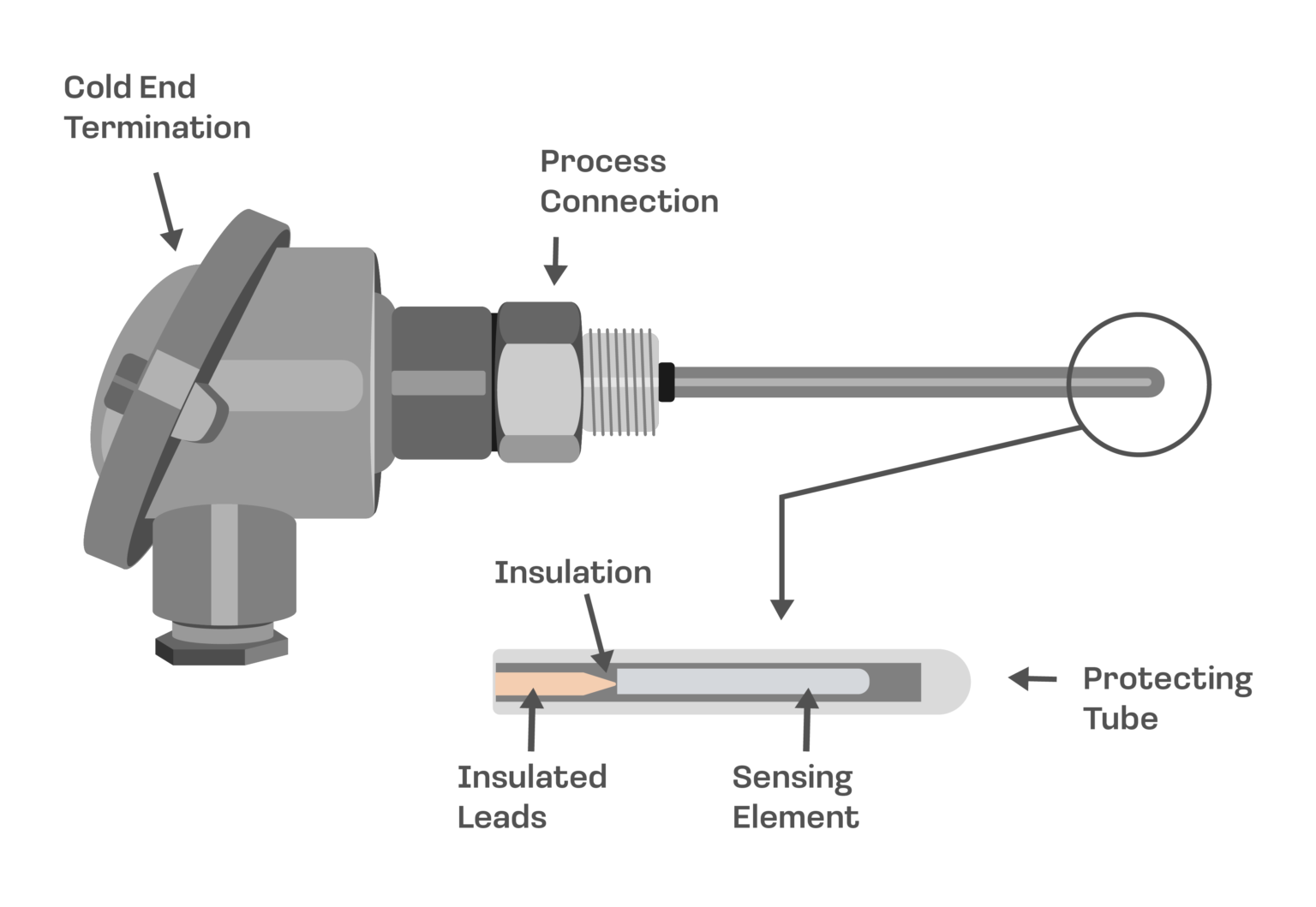
A temperature sensor can contain several materials beyond the sensing element. Lead wires, insulation, solder, terminals, connectors, housings, plating, adhesives, and potting compounds can all factor into RoHS and REACH evaluations.
Material choices also affect sensor performance. An RTD or thermistor probe may need to tolerate high temperatures, moisture, chemicals, vibration, or other operating conditions. OEMs should communicate these conditions along with applicable substance restrictions so suitable materials can be considered during development.
Custom designs add another layer of consideration. Changing a connector, cable, housing, or protective material may alter the assembly's material composition, making accurate documentation for the finished configuration important.
The Importance of Manufacturing and Supply Chain Controls
RoHS and REACH considerations continue after a sensor design enters production. Changes to raw materials, components, or suppliers can affect the material composition of a thermistor, RTD, or probe assembly.
Clear specifications, supplier documentation, and change controls help manufacturers track the materials used in each configuration. These practices also give OEMs more reliable information when reviewing compliance records or responding to updated substance requirements.
What OEMs Should Ask Their Temperature Sensor Supplier
A general compliance statement may not provide enough information for an OEM evaluating a temperature sensor. Asking more specific questions can help engineering, purchasing, and quality teams understand the materials and documentation associated with a particular configuration.
Consider asking:
- Does the compliance information apply to this exact part number and configuration?
- Are any RoHS exemptions applicable to the sensor?
- What REACH or SVHC documentation is available?
- How are material and supplier changes controlled?
- Can alternative materials be considered for a custom sensor design?
- What documentation is available if our compliance team needs additional information?
Clear answers can make supplier qualification easier and help OEMs identify potential concerns earlier in development.
How EI Sensor Supports RoHS- and REACH-Conscious Temperature Sensor Design
EI Sensor Technologies brings more than 30 years of experience to thermistors, RTDs, and temperature probe assemblies. Our team works directly alongside OEM customers to understand application requirements, material considerations, and custom design needs.
Since many EI Sensor products are custom, customers can discuss unusual temperature, mechanical, electrical, and material specifications rather than trying to adapt a standard sensor to every
application. Our goal is to provide practical engineering support and dependable communication throughout the development process.
Have questions about RoHS or REACH considerations for your temperature sensing project? Email sales@ei-sensor.com for engineering assistance or to discuss a custom sensor design.