
BLOG

NTC Thermistor Chips & How They Are Made

September 18, 2026

Share this Article:

A temperature sensor may look simple from the outside, but its performance starts at the material level. For OEMs, differences in resistance, response, stability, size, and/or operating range can affect how well a sensor performs in an application.


Those characteristics begin to take shape long before a thermistor reaches a finished probe assembly. The material composition selected for an NTC thermistor chip, as well as the manufacturing processes involved, influence its electrical properties and stability characteristics.

What is an NTC Thermistor Chip?

An NTC thermistor chip is a small ceramic temperature-sensitive element typically comprised of a mixture of metal oxide powders. Its ohmic resistance decreases as temperature rises, allowing the user to detect temperature changes.


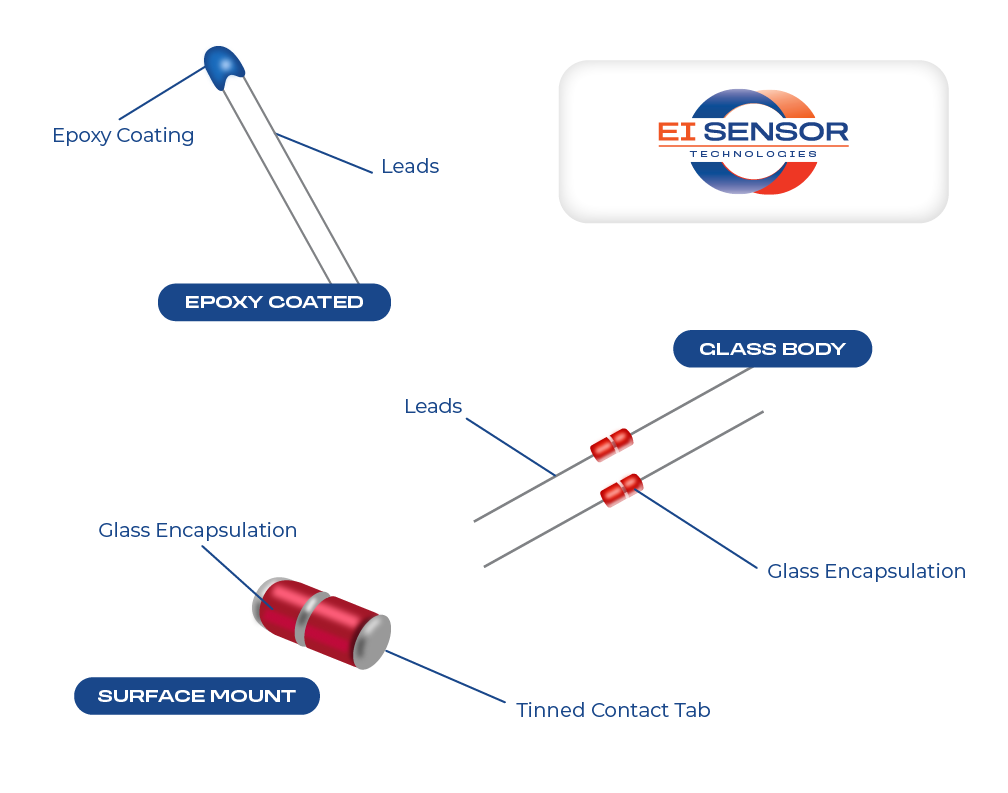
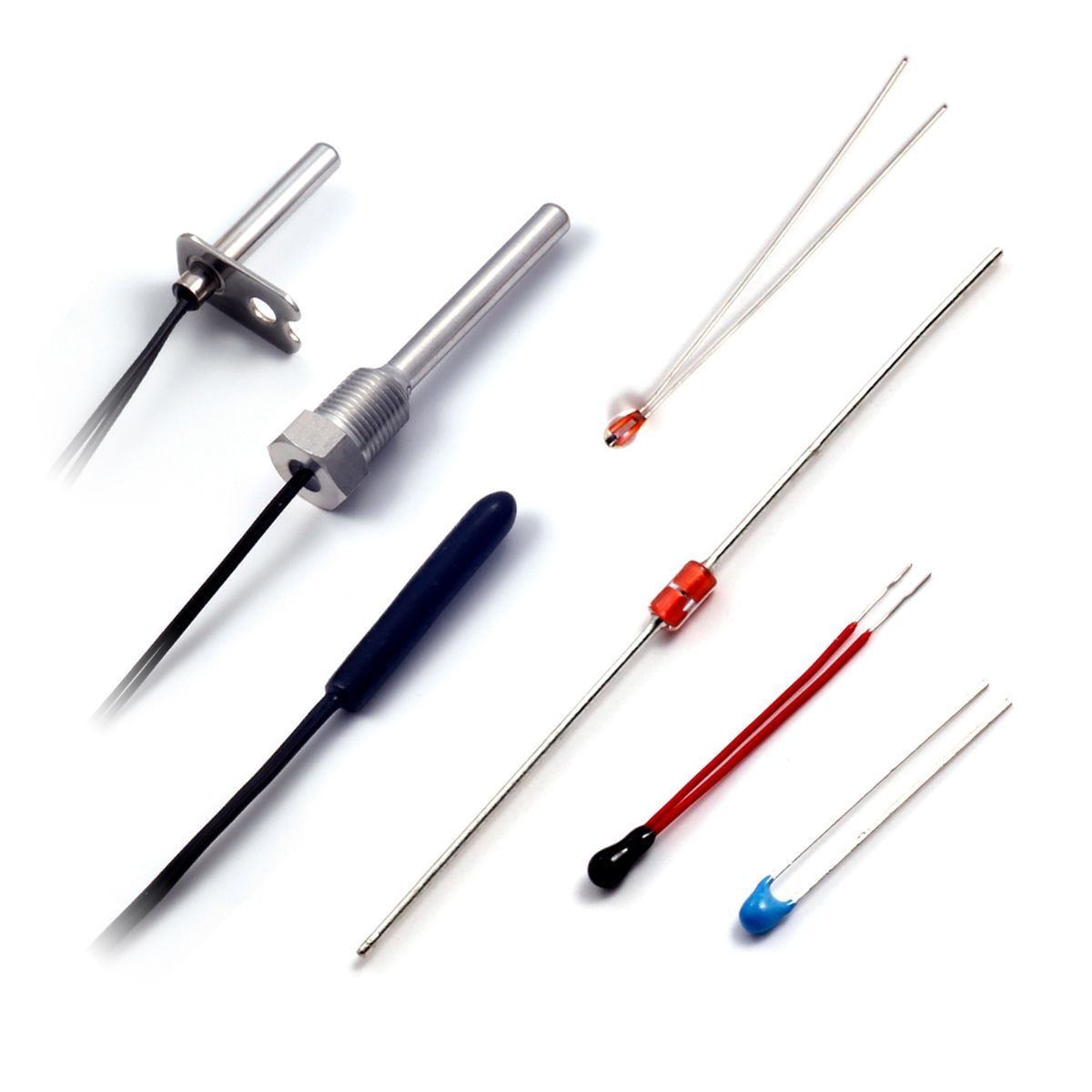
The thermistor chips can be used in raw chip form or configured into a leaded configuration, as well as into a complete probe assembly. Their compact size and high sensitivity make them suitable for many OEM temperature measurement and control applications.

How NTC Thermistor Chips Measure Temperature

NTC thermistor chips measure temperature through predictable changes in its electrical resistance. As the body temperature of the thermistor chip increases, its resistance value decreases, and vice versa.

Common Materials Used in NTC Thermistor Chips

NTC thermistor chips are produced from mixtures of metal oxides. Manganese, cobalt, nickel and copper oxides (as well as others) are frequently used in different proportions to produce a thermistor element. The specific metal oxide composition and manufacturing processes will dictate the electrical resistivity, resistance versus temperature characteristics and stability of the final thermistor element.

How NTC Thermistor Chips Are Made

Manufacturing begins by carefully selecting, blending and processing metal oxide powders according to the desired electrical characteristics. The blended materials are formed into a ceramic body, and then fired at high temperatures through a process called sintering. The sintering process turns the metal oxide powders into a true ceramic.


After sintering, the resulting ceramic material is processed into individual chips. Electrodes are applied to the chip to provide an electrical contact. The electrodes may be applied before or after the ceramic material is processed into individual chips. The finished thermistor chips can then be tested and sorted according to their specified resistance characteristics.

How Material Composition and Manufacturing Affect Thermistor Performance

Small changes in metal oxide ratios, processing temperatures, and other processing techniques will influence the final thermistor chip performance.

NTC Thermistor Chips in Temperature Sensor and Probe Assemblies

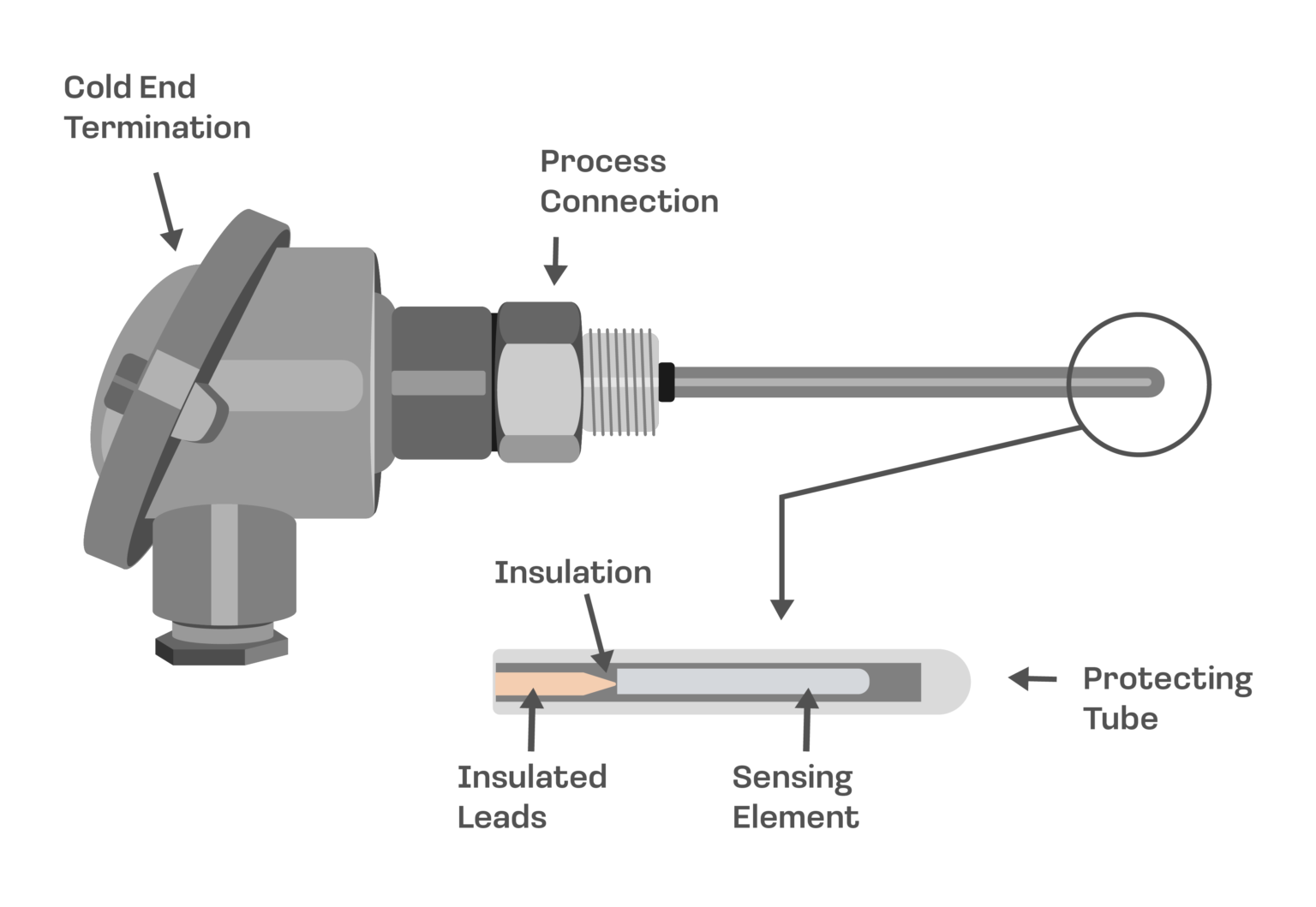
An NTC thermistor chip is often incorporated into a finished temperature probe assembly. The chip can be attached to lead wires, encapsulated, and/or placed into a probe housing designed for the application. These added components help protect the sensing element and allow it to be installed into a particular application.


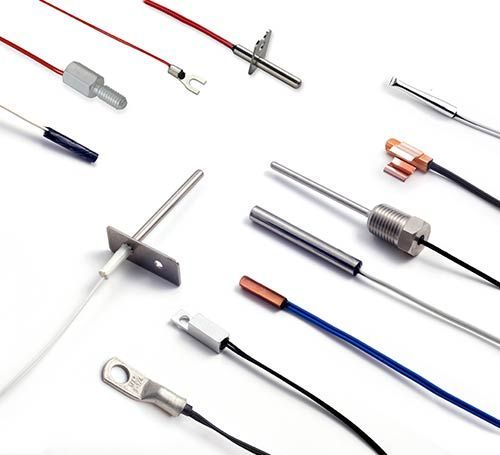
The probe design can influence response time, durability, moisture resistance capability and installation/mounting options. EI Sensor develops thermistor probe assemblies for OEM applications across HVAC-R, building automation, medical equipment, appliances, food handling and processing, and industrial systems. Custom designs can address specific size, mounting, electrical, and environmental requirements.

Assorted electrical sensors and probes with wires, arranged on a white background

Selecting an NTC Thermistor for an Application

Choosing an NTC thermistor starts by considering the conditions that the sensor will encounter in the intended application. The final design should take into consideration the operating temperature range, nominal base resistance value, resistance versus temperature curve, temperature accuracy, size requirements, as well as other electrical and environmental requirements.


Knowing the environment that the sensor will be exposed to in the intended application is important. Exposure to moisture, vibration, chemicals, or repeated temperature cycling can influence how the sensor assembly is designed and manufactured.


The best selection of a thermistor is often a custom configuration rather than a standard component.

Partner With EI Sensor for NTC Thermistor Solutions

EI Sensor brings more than 30 years of temperature sensing experience to OEM projects. Our team applies that knowledge to standard and custom NTC thermistors and probe assemblies, including solutions for applications that require unique configurations.


Customers can work directly with an experienced team focused on practical technical support, consistent quality, and solutions that make their jobs easier.


Need engineering assistance or a quote for an NTC thermistor solution? Email sales@ei-sensor.com to discuss your project.

Connect with us:

Technician repairing electrical wiring inside an air conditioner unit
September 15, 2026
Learn how RoHS and REACH compliance affects temperature sensor materials, documentation, design decisions, and supplier selection for OEM applications.
Worker in yellow protective suit and mask inspecting stacked cans in a factory warehouse
September 10, 2026
Learn why RTD calibration matters for FDA compliance, accurate cold storage temperature monitoring, reliable records, and food and beverage safety.
Mechanic using a power tool on a metal gearbox assembly in a workshop
May 22, 2026
Improve automotive performance and reliability with temperature sensors designed for engines, EV batteries, HVAC, emissions, and demanding automotive environments.

Show More