BLOG

The Importance of Temperature Monitoring for Food Safety

May 19, 2026

Share this Article:

Temperature control directly impacts how food is handled, stored, and prepared across the supply chain. Temperature monitoring helps reduce risk, maintain product quality, and keep operations aligned with food safety requirements.


Accurate readings allow teams to respond quickly to changes and keep products within acceptable temperature ranges across processing, storage, and preparation environments.

The Science Behind Food Safety and Temperature

Food safety depends on keeping products within defined temperature ranges that limit bacterial growth. When temperatures rise or fall outside those limits, microorganisms can multiply quickly and increase the risk of contamination.


Different food types require different handling conditions. Perishable items such as meat, dairy, and prepared foods are especially sensitive to temperature changes. Even small fluctuations can affect shelf life, texture, and overall quality.


Temperature monitoring provides the data needed to track th
ese conditions in real time. This allows operators to take action before issues escalate, helping keep food safe throughout processing, storage, and handling stages.

Key Food Industry Applications Requiring Temperature Monitoring

Temperature monitoring is used across multiple stages of the food supply chain to keep products within safe handling ranges and maintain consistent quality.

Food Processing

Processing environments require tight temperature control to prevent bacterial growth and maintain product consistency. Sensors track cooking, cooling, and handling conditions throughout production.

Cold Storage & Refrigeration (HVAC-R)

Refrigeration systems rely on accurate temperature readings to keep perishable goods within safe storage limits. This includes walk-in coolers, freezers, and large-scale storage facilities.

Food Transportation & Logistics

During transport, temperature changes can quickly impact product safety. Monitoring systems track conditions in trucks, containers, and distribution networks to help prevent spoilage.

Commercial Kitchens & Food Service

In kitchens and food service operations, temperature data helps manage cooking, holding, and storage practices. This helps reduce the risk of foodborne illness and supports safe serving conditions.

Temperature Sensors Used in Food Safety Monitoring

Different sensor technologies are used in food safety applications based on accuracy, response time, and environmental exposure. The right choice depends on how and where the sensor will be used.

Thermistors (NTC & PTC)

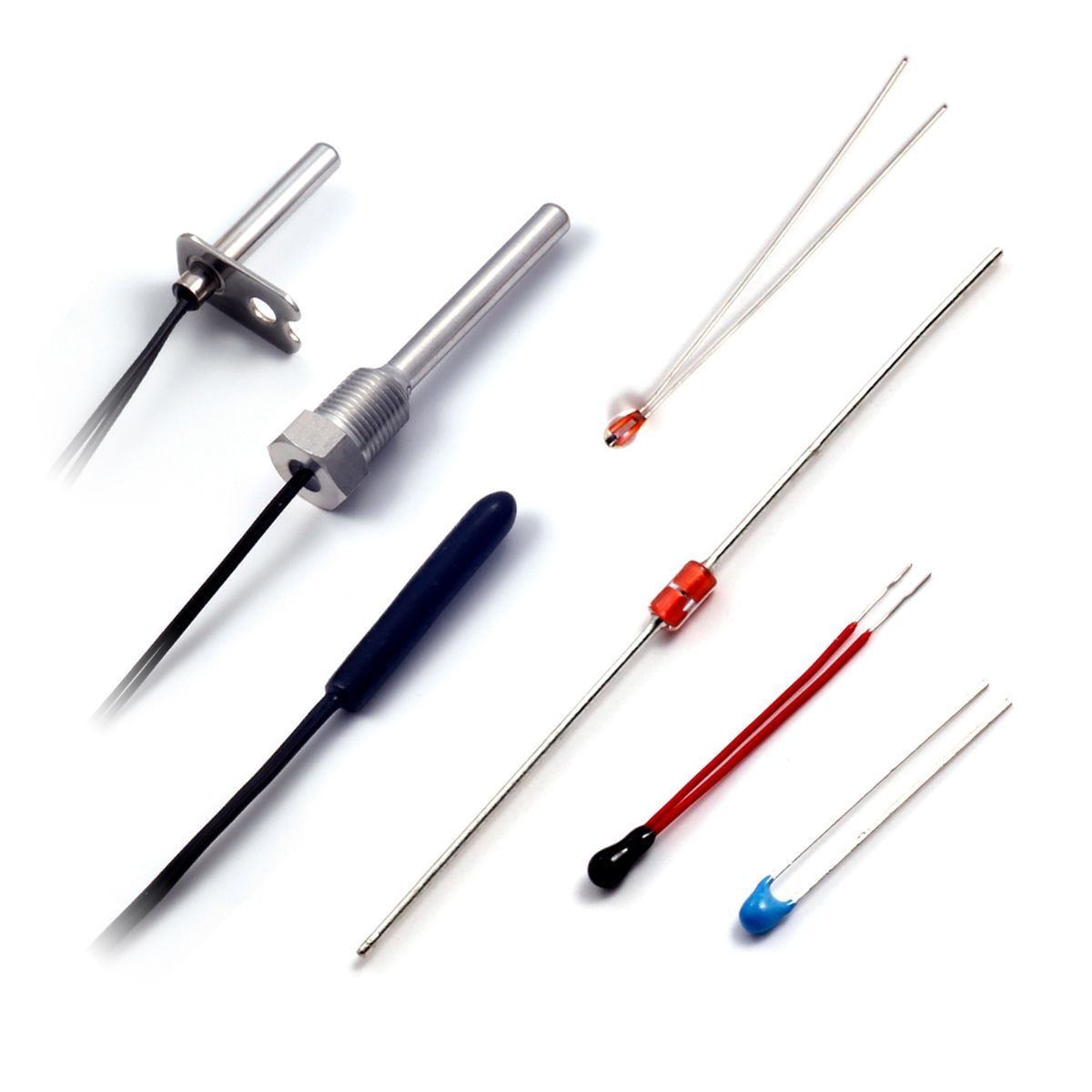
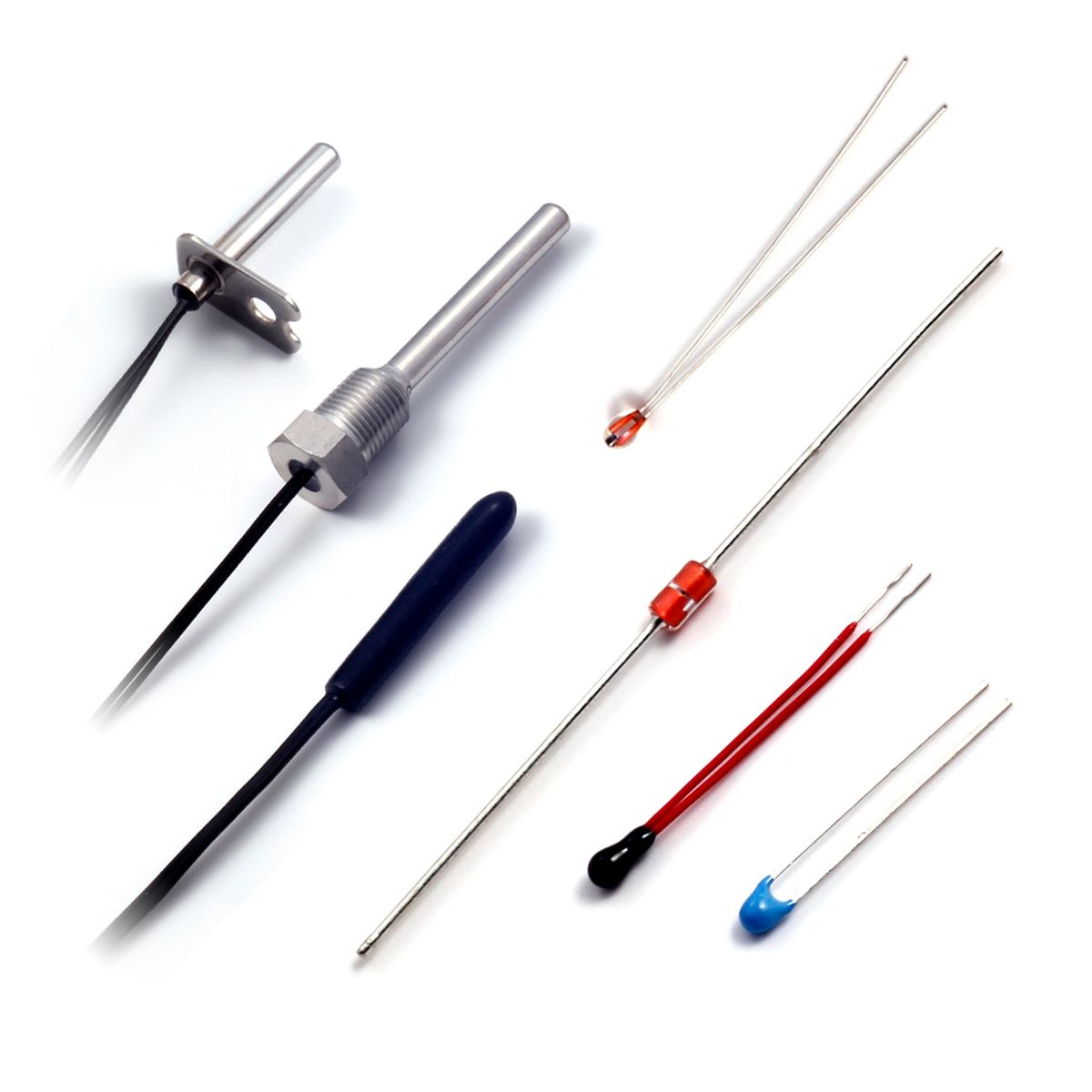
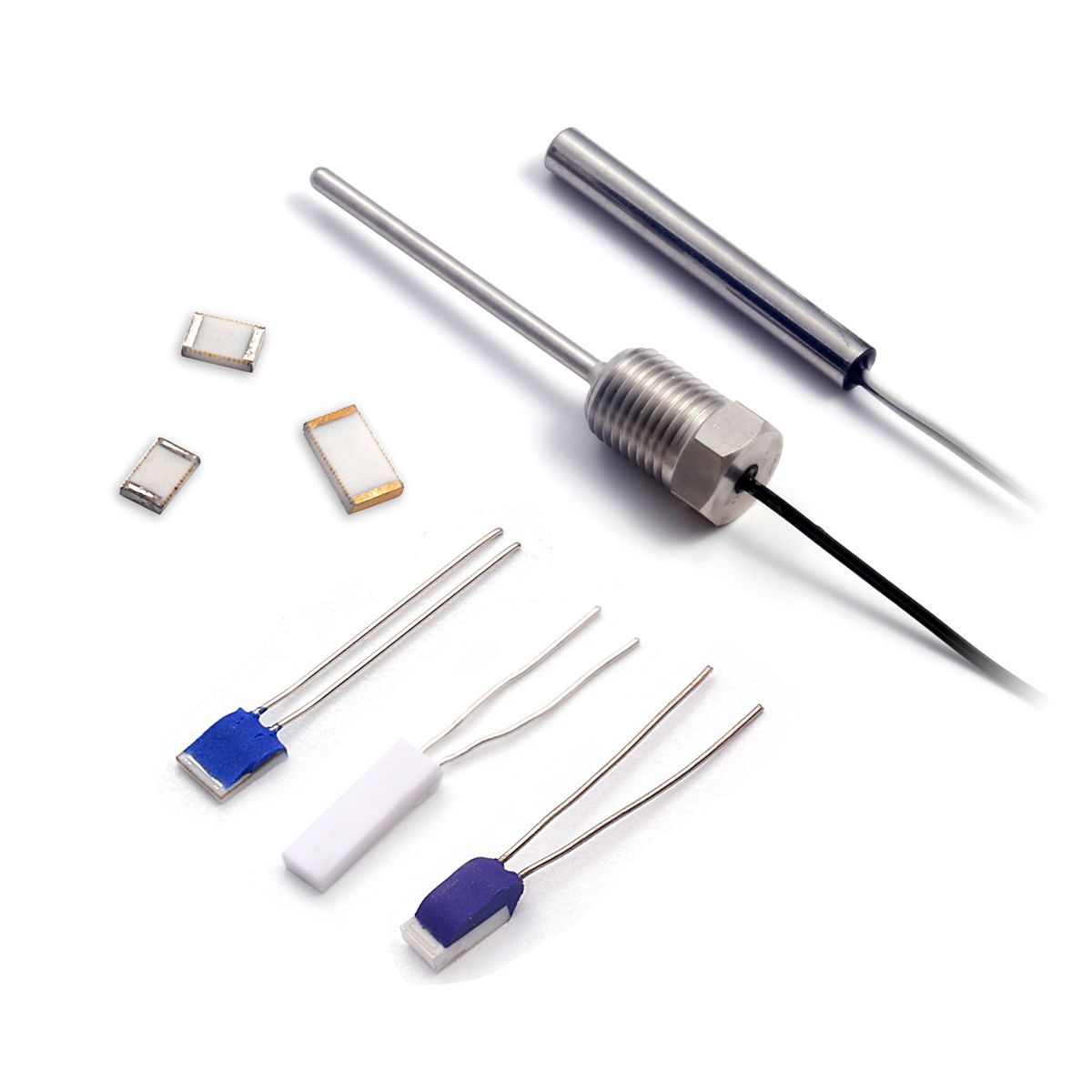
Thermistors offer high sensitivity and fast response, making them a strong fit for monitoring rapid temperature changes. NTC thermistors are commonly used for measurement and control, while PTC thermistors are used in protection and limiting functions.

Assorted precision tools and probes with metal shafts and colored handles on a white background
Assorted electronic sensors and probes in metal, white, blue, and black housings on a white background

RTDs (Resistance Temperature Detectors)

RTDs provide stable and repeatable readings across a wider temperature range. They are well-suited for applications that require long-term consistency, especially in processing and storage environments.

Thermistor & RTD Probe Assemblies

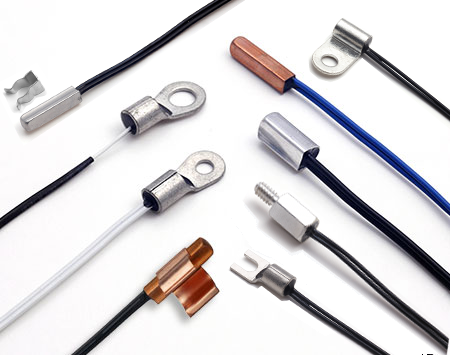
Probe assemblies package sensing elements into durable housings designed for food-related environments. These assemblies can be configured for immersion, surface contact, or air measurement, depending on the application.

Assorted electrical wire terminals and crimp connectors in black, white, blue, copper, and silver

Choosing the Right Temperature Sensor for Your Application

Selecting the right sensor comes down to the specific conditions of the application. Temperature range, response time, accuracy, and installation requirements all need to be considered early in the process.


Thermistors are well-suited for applications that require quick response and high sensitivity within tighter ranges. RTDs are a better fit for environments that require stable, repeatable readings across a broader range.


Physical design also matters. Probe length, housing material, and lead configurati
on all affect how the sensor performs in food environments. Matching the sensor design to the application helps improve accuracy, reliability, and ease of integration.

The Role of Custom Sensor Solutions in Food Safety

Standard sensors may not always align with the specific conditions found in food environments. Differences in equipment design, cleaning processes, and exposure to moisture or chemicals can impact performance.


Custom sensor solutions allow OEMs to match the design to the application. Adjustments can include probe dimensions, materials, sealing methods, and lead configurations. These changes help improve fit and long-term reliability in demanding conditions.


Working with a supplier that offers customization gives customers more control over performance and integration, helping reduce issues during testing and production.

Compliance, Standards, and Best Practices

Food safety regulations require strict temperature control across processing, storage, and distribution. Temperature monitoring helps companies stay aligned with requirements set by organizations such as the FDA and USDA.


Key best practices include:

  • Follow defined temperature ranges: Adhere to recommended storage, cooking, and holding temperatures for different food types.
  • Use accurate, reliable sensors: Consistent readings help maintain compliance and reduce the risk of unsafe conditions.
  • Place sensors in key locations: Position sensors where temperature variation is most likely to occur, such as in storage units and processing lines.
  • Calibrate regularly: Routine calibration keeps measurements accurate over time and supports audit readiness.
  • Maintain clear records: Document temperature data to track performance and provide proof during inspections.
  • Select durable sensor designs: Choose sensors that can handle washdowns, moisture, and exposure to cleaning agents.

Common Challenges in Food Temperature Monitoring (and How to Solve Them)

Food operations face several challenges when managing temperature across different environments:

  • Inconsistent readings: Variations in sensor accuracy can lead to unreliable data. Using high-quality sensors and scheduling regular calibration helps improve consistency.
  • Sensor placement issues: Poor placement can miss temperature fluctuations in key areas. Positioning sensors at critical points, such as storage zones or processing lines, improves visibility.
  • Harsh cleaning environments: Frequent washdowns and exposure to chemicals can impact sensor performance. Selecting moisture-resistant designs and durable materials helps extend service life.
  • Equipment integration challenges: Sensors that do not align with existing equipment can slow installation. Custom probe designs help match exact mounting and space requirements.
  • Data gaps or delays: Incomplete or delayed readings make it harder to respond to changes. Reliable monitoring systems and consistent data collection help address this issue.

Addressing these challenges early helps improve accuracy, reduce risk, and keep operations running smoothly.

Building Safer Food Systems with Reliable Temperature Monitoring

Reliable temperature monitoring helps reduce risk, improve product quality, and keep food handling processes under control. Accurate data allows teams to respond quickly to temperature changes across storage, processing, and service environments.


EI Sensor Technologies provides thermistors, RTDs, and probe assemblies designed for food applications, including environments that involve moisture, cleaning cycles, and tight installation requirements.


Email sales@ei-sensor.com to
request a quote or connect with an engineer.

Connect with us:

Mechanic using a power tool on a metal gearbox assembly in a workshop
May 22, 2026
Improve automotive performance and reliability with temperature sensors designed for engines, EV batteries, HVAC, emissions, and demanding automotive environments.
Row of white wind turbines on a green field under a clear blue sky
May 15, 2026
Improve wind turbine reliability with precise temperature sensors that monitor gearboxes, generators, bearings, and power electronics for predictive maintenance.
A variety of industrial and electronic temperature sensors, probes, and thermistors arranged on a white background.
March 30, 2026
Improve water treatment performance with accurate temperature sensors for better process control, equipment protection, and consistent water quality.
Show More